Combinational and Sequential Logic
The fundamental distinction between combinational logic (no memory) and sequential logic (clocked).
Two Types of Digital Logic
In digital design, every circuit belongs to one of two categories:
| Combinational Logic | Sequential Logic | |
|---|---|---|
| Memory | No | Yes (flip-flops) |
| Depends on past | No | Yes |
| Clock | Not needed | Essential |
| Examples | Multiplexer, adder | Register, counter, FSM |
Combinational Logic
The output depends only on the current inputs. No internal state.
architecture rtl of mux2 is
begin
  -- Concurrent assignment: immediate, combinational
  o_y <= i_a when i_sel = '0' else i_b;
end architecture rtl;
Characteristics
- No clock needed
- Instantaneous response (in practice: propagation delay)
- In synthesis: produces LUTs (Look-Up Tables)
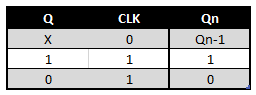
Sequential Logic
The output depends on the inputs and the past state. It is synchronized on a clock.
architecture rtl of register_8 is
  signal r_data : std_logic_vector(7 downto 0);
begin
  process